Overtaking · Lanes

34 questions · Based on public Transport WA materials · English explanations and handbook references

Q0007Quiz 1

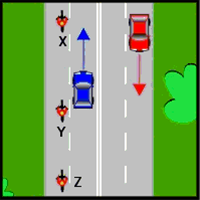
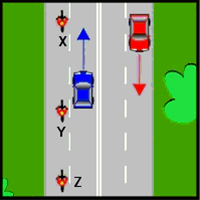
Which motorcycle is in the car driver's blind spot?
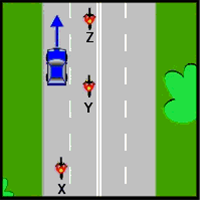
Illustration for question Q0007
View answer and explanation

Answer: B

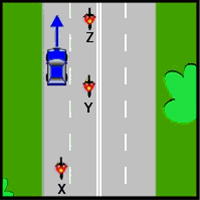
Motorcycle Y is in the adjacent lane, alongside the rear of the car — an area that can't be seen in the rear-view or side mirrors (the blind spot).

📖 Reference: 1.11 / 3.15 — Blind spots. There are blind spots at the sides and rear of your vehicle that cannot be seen in the mirrors. Check your blind spots by glancing over your shoulder before you move left or right.
Q0014Quiz 1

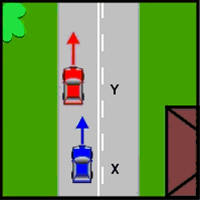
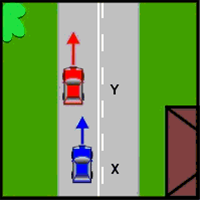
Is vehicle X allowed to overtake vehicle Y?

Illustration for question Q0014
View answer and explanation

Answer: B

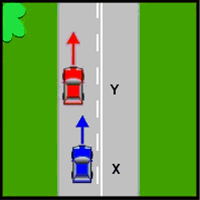
Official answer: No. In this diagram, X is not allowed to overtake Y.

📖 Reference: 3.16 — Overtaking. To overtake safely you must get a good view of the road ahead, check mirrors and blind spots, and only overtake when it is safe. You must not exceed the speed limit to overtake, and you must not overtake unless it can be done safely.

Q0026Quiz 1

What area is known as a vehicle driver's blind spot?

View answer and explanation

Answer: B

Blind spot: the area beside or behind your car that cannot be seen in the rearview or side mirrors.

📖 Reference: 1.11 / 3.15 — Blind spots. There are blind spots at the sides and rear of your vehicle that cannot be seen in the mirrors. Check your blind spots by glancing over your shoulder before you move left or right.
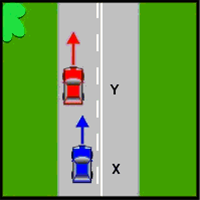
Q0027Quiz 1

Which motorcycle is in the car driver's blind spot?

Illustration for question Q0027
View answer and explanation

Answer: B

Motorcycle Y is alongside the rear left side of the car, in an area that can't be seen in the rear-view or side mirrors.

📖 Reference: 1.11 / 3.15 — Blind spots. There are blind spots at the sides and rear of your vehicle that cannot be seen in the mirrors. Check your blind spots by glancing over your shoulder before you move left or right.
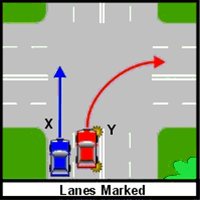
Q0042Quiz 2

Is vehicle X allowed to overtake vehicle Y?

Illustration for question Q0042
View answer and explanation

Answer: B

📖 Reference: 3.16 — Overtaking. To overtake safely you must get a good view of the road ahead, check mirrors and blind spots, and only overtake when it is safe. You must not exceed the speed limit to overtake, and you must not overtake unless it can be done safely.

Q0057Quiz 2

Do you need to indicate if you overtake a vehicle on an unmarked two-way road?

View answer and explanation

Answer: C

You must use your turn signal when overtaking on a two-way road without lane markings.

📖 Reference: 3.16 — Overtaking. To overtake safely you must get a good view of the road ahead, check mirrors and blind spots, and only overtake when it is safe. You must not exceed the speed limit to overtake, and you must not overtake unless it can be done safely.

Q0069Quiz 3

What should you do if you are travelling slowly on a two-way road and there is a queue of vehicles behind you?

View answer and explanation

Answer: A

When driving slowly and being overtaken by a queue of vehicles, keep left and give way.

📖 Reference: 3.4 — Keeping to the Left. If you are driving a slow moving vehicle, pull well over to the left to allow following traffic to overtake.

Q0071Quiz 3

Which of the following statements is correct?

Illustration for question Q0071
View answer and explanation

Answer: B

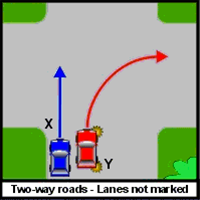
Vehicle X may pass Vehicle Y on the left because Vehicle Y is turning right and signaling a right turn.

📖 Reference: 3.13 — Intersections (give way). Give way to all traffic coming from the left or right, including turning vehicles. A vehicle entering a road from a driveway or terminating road must give way to traffic on the continuing road.

Q0079Quiz 3

Which of the following statements is correct?

Illustration for question Q0079
View answer and explanation

Answer: A

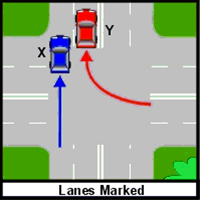
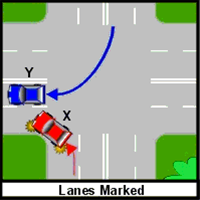
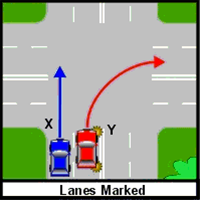
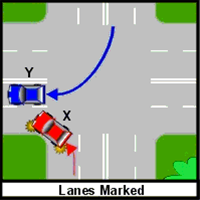
On a multi-lane road with marked lanes, you're allowed to overtake on the left if the vehicle you're passing is in a right-hand lane.

📖 Reference: 3.13 — Intersections (give way). Give way to all traffic coming from the left or right, including turning vehicles. A vehicle entering a road from a driveway or terminating road must give way to traffic on the continuing road.

Q0084Quiz 3

What is the correct procedure when changing lanes?

View answer and explanation

Answer: C

Lane change procedure: check inside and exterior mirrors → signal early → turn your head to check the blind spot → yield.

📖 Reference: 3.15 — Changing Lanes. To change lanes safely you should: check your internal and external mirrors; indicate/signal for a sufficient distance to warn other drivers; look over your shoulder to check your blind spot; and give way to traffic in the other lane.

Q0088Quiz 3

Which of the following statements is correct?

Illustration for question Q0088
View answer and explanation

Answer: B

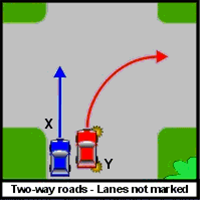
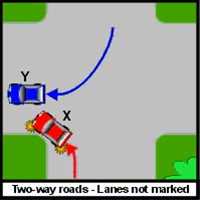
On an unmarked two-way road, do not overtake on the left unless the vehicle ahead is turning right or is stopped. In the diagram, Vehicle X is shown passing Vehicle Y on the left.

📖 Reference: 3.13 — Intersections (give way). Give way to all traffic coming from the left or right, including turning vehicles. A vehicle entering a road from a driveway or terminating road must give way to traffic on the continuing road.

Q0091Quiz 4

Which of the following statements is correct?

Illustration for question Q0091
View answer and explanation

Answer: A

Official answer: Vehicle X must not overtake Y (overtaking is not allowed in this diagram).

📖 Reference: 3.13 — Intersections (give way). Give way to all traffic coming from the left or right, including turning vehicles. A vehicle entering a road from a driveway or terminating road must give way to traffic on the continuing road.

Q0093Quiz 4

For how long must you indicate before you overtake a vehicle?

View answer and explanation

Answer: A

Before overtaking, signal for just long enough to alert other road users.

📖 Reference: 3.16 — Overtaking. To overtake safely you must get a good view of the road ahead, check mirrors and blind spots, and only overtake when it is safe. You must not exceed the speed limit to overtake, and you must not overtake unless it can be done safely.

Q0103Quiz 4

Which of the following statements is correct?

Illustration for question Q0103
View answer and explanation

Answer: C

The provided text is already in English. A slightly more natural version: “You may overtake on the left if the vehicle ahead is turning right and there is a marked lane to pass in.”

📖 Reference: 3.13 — Intersections (give way). Give way to all traffic coming from the left or right, including turning vehicles. A vehicle entering a road from a driveway or terminating road must give way to traffic on the continuing road.

Q0111Quiz 4

Which of the following statements is correct?

Illustration for question Q0111
View answer and explanation

Answer: B

Official answer: Vehicle X may overtake Y (official marking confirms this).

📖 Reference: 3.13 — Intersections (give way). Give way to all traffic coming from the left or right, including turning vehicles. A vehicle entering a road from a driveway or terminating road must give way to traffic on the continuing road.

Q0120Quiz 4

Which of the following statements is correct?

Illustration for question Q0120
View answer and explanation

Answer: A

You may overtake on the left if the vehicle ahead is turning right.

📖 Reference: 3.13 — Intersections (give way). Give way to all traffic coming from the left or right, including turning vehicles. A vehicle entering a road from a driveway or terminating road must give way to traffic on the continuing road.

Q0161Quiz 6

Which of the following should you do before overtaking a long vehicle?

View answer and explanation

Answer: B

When overtaking a long vehicle, keep enough distance behind it so you can see the road ahead.

📖 Reference: 3.16 — Overtaking. To overtake safely you must get a good view of the road ahead, check mirrors and blind spots, and only overtake when it is safe. You must not exceed the speed limit to overtake, and you must not overtake unless it can be done safely.

Q0182Quiz 7

Which of the following statements is correct?

Illustration for question Q0182
View answer and explanation

Answer: A

On a two-way road with no marked lanes, a vehicle going straight (X) is allowed to overtake a vehicle turning right (Y) on the left side.

📖 Reference: 3.13 — Intersections (give way). Give way to all traffic coming from the left or right, including turning vehicles. A vehicle entering a road from a driveway or terminating road must give way to traffic on the continuing road.

Q0195Quiz 7

What area is known as a vehicle driver's blind spot?

View answer and explanation

Answer: B

Blind spot = the area that rearview mirrors can’t see.

📖 Reference: 1.11 / 3.15 — Blind spots. There are blind spots at the sides and rear of your vehicle that cannot be seen in the mirrors. Check your blind spots by glancing over your shoulder before you move left or right.
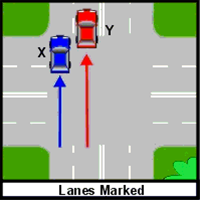
Q0203Quiz 7

Do you need to indicate if you overtake a vehicle on an unmarked two-way road?

View answer and explanation

Answer: C

On an unmarked two-way road, use your turn signal when overtaking.

📖 Reference: 3.16 — Overtaking. To overtake safely you must get a good view of the road ahead, check mirrors and blind spots, and only overtake when it is safe. You must not exceed the speed limit to overtake, and you must not overtake unless it can be done safely.

Q0204Quiz 7

Which of the following statements is correct?

Illustration for question Q0204
View answer and explanation

Answer: B

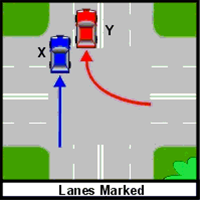
Vehicle X is in a marked lane to the left of Vehicle Y. Since Vehicle Y is turning right, Vehicle X is allowed to pass (overtake) on the left.

📖 Reference: 3.13 — Intersections (give way). Give way to all traffic coming from the left or right, including turning vehicles. A vehicle entering a road from a driveway or terminating road must give way to traffic on the continuing road.

Q0215Quiz 8

What is the correct procedure when changing lanes?

View answer and explanation

Answer: C

Lane change procedure: check mirrors → signal early → turn your head to check the blind spot → yield.

📖 Reference: 3.15 — Changing Lanes. To change lanes safely you should: check your internal and external mirrors; indicate/signal for a sufficient distance to warn other drivers; look over your shoulder to check your blind spot; and give way to traffic in the other lane.

Q0222Quiz 8

Is vehicle X allowed to overtake vehicle Y?

Illustration for question Q0222
View answer and explanation

Answer: B

The broken white line separating the lanes indicates that vehicles are permitted to cross it to overtake, provided the way is clear and it is safe to do so.

📖 Reference: 3.16 — Overtaking. To overtake safely you must get a good view of the road ahead, check mirrors and blind spots, and only overtake when it is safe. You must not exceed the speed limit to overtake, and you must not overtake unless it can be done safely.

Q0228Quiz 8

Which of the following statements is correct?

Illustration for question Q0228
View answer and explanation

Answer: C

Vehicle X may overtake Vehicle Y on the left because Vehicle Y is turning right. This is a specific exception to the general rule of overtaking on the right.

📖 Reference: 3.13 — Intersections (give way). Give way to all traffic coming from the left or right, including turning vehicles. A vehicle entering a road from a driveway or terminating road must give way to traffic on the continuing road.

Q0236Quiz 8

What should you do if you are travelling slowly on a two-way road and there is a queue of vehicles behind you?

View answer and explanation

Answer: A

When a line of vehicles is overtaking you, keep left and give way.

📖 Reference: 3.4 — Keeping to the Left. If you are driving a slow moving vehicle, pull well over to the left to allow following traffic to overtake.

Q0237Quiz 9

Which motorcycle is in the car driver's blind spot?

Illustration for question Q0237
View answer and explanation

Answer: B

Motorcycle Y is alongside the car in the adjacent lane, in the area that is typically hidden from the driver's view in both the rear-view and side mirrors—the blind spot.

📖 Reference: 1.11 / 3.15 — Blind spots. There are blind spots at the sides and rear of your vehicle that cannot be seen in the mirrors. Check your blind spots by glancing over your shoulder before you move left or right.
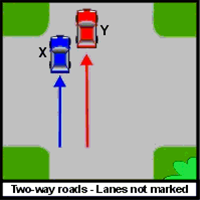
Q0247Quiz 9

Is vehicle X allowed to overtake vehicle Y?

Illustration for question Q0247
View answer and explanation

Answer: B

Official answer: No. In this diagram, X is not allowed to overtake Y.

📖 Reference: 3.16 — Overtaking. To overtake safely you must get a good view of the road ahead, check mirrors and blind spots, and only overtake when it is safe. You must not exceed the speed limit to overtake, and you must not overtake unless it can be done safely.

Q0255Quiz 9

Which of the following statements is correct?

Illustration for question Q0255
View answer and explanation

Answer: B

Official answer: Vehicle X may overtake Y (confirmed by official scoring).

📖 Reference: 3.13 — Intersections (give way). Give way to all traffic coming from the left or right, including turning vehicles. A vehicle entering a road from a driveway or terminating road must give way to traffic on the continuing road.

Q0279Quiz 10

Which of the following statements is correct?

Illustration for question Q0279
View answer and explanation

Answer: A

Official answer: Vehicle X must not overtake Y (overtaking is not allowed in this diagram).

📖 Reference: 3.13 — Intersections (give way). Give way to all traffic coming from the left or right, including turning vehicles. A vehicle entering a road from a driveway or terminating road must give way to traffic on the continuing road.

Q0290Quiz 10

Which motorcycle is in the car driver's blind spot?

Illustration for question Q0290
View answer and explanation

Answer: B

Motorcycle Y is alongside the rear of the car, in the area not covered by the rear-view or side mirrors — the blind spot.

📖 Reference: 1.11 / 3.15 — Blind spots. There are blind spots at the sides and rear of your vehicle that cannot be seen in the mirrors. Check your blind spots by glancing over your shoulder before you move left or right.
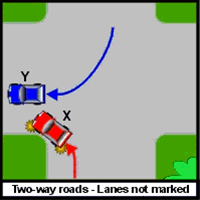
Q0292Quiz 10

Which of the following should you do before overtaking a long vehicle?

View answer and explanation

Answer: B

When overtaking a long vehicle, stay farther back so you can see clearly ahead.

📖 Reference: 3.16 — Overtaking. To overtake safely you must get a good view of the road ahead, check mirrors and blind spots, and only overtake when it is safe. You must not exceed the speed limit to overtake, and you must not overtake unless it can be done safely.

Q0304Quiz 11

What is the correct procedure when changing lanes?

View answer and explanation

Answer: C

Lane change procedure: check mirrors → signal early → turn your head to check the blind spot → yield.

📖 Reference: 3.15 — Changing Lanes. To change lanes safely you should: check your internal and external mirrors; indicate/signal for a sufficient distance to warn other drivers; look over your shoulder to check your blind spot; and give way to traffic in the other lane.

Q0314Quiz 11

Which of the following statements is correct?

Illustration for question Q0314
View answer and explanation

Answer: B

On a two-way road with no marked lanes, you must not overtake a vehicle on the left (unless it is turning right). The diagram shows Vehicle X positioned to pass on the left side.

📖 Reference: 3.13 — Intersections (give way). Give way to all traffic coming from the left or right, including turning vehicles. A vehicle entering a road from a driveway or terminating road must give way to traffic on the continuing road.

Q0315Quiz 11

For how long must you indicate before you overtake a vehicle?

View answer and explanation

Answer: A

Signal for long enough before overtaking.

📖 Reference: 3.16 — Overtaking. To overtake safely you must get a good view of the road ahead, check mirrors and blind spots, and only overtake when it is safe. You must not exceed the speed limit to overtake, and you must not overtake unless it can be done safely.